Quick answer
Host an executive roundtable around the accounts you want to move. Pick one problem your guests share, brief a moderator who won't pitch, invite 8 to 15 senior peers in tiers, run a tight two-hour agenda, and give every attending account an owned follow-up within 48 hours.
- One topic, three to five prepared questions
- An account-first list, invited in tiers
- A note-taker, so hosts can stay in the conversation
- An owned next step for every account within 48 hours
What is an executive roundtable?
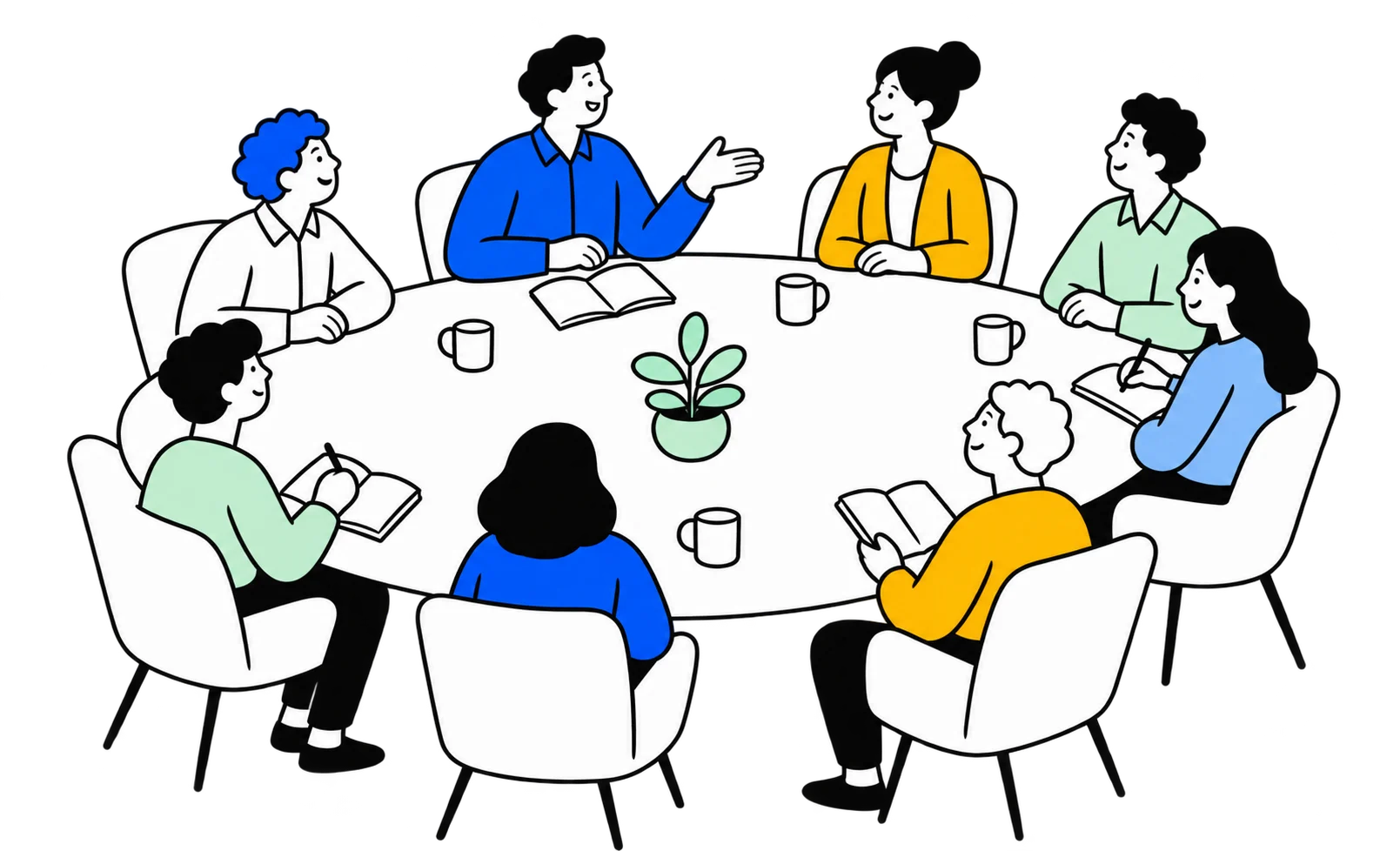
An executive roundtable is a small, invite-only discussion where senior peers work through one shared problem with a moderator. Guests come for the conversation with each other. Your company earns the right to host it, and a reason to follow up with every account in the room.
That is the trade. Guests get an honest hour with peers who face the same problem. You get to hear, in their own words, what your target accounts are working on. One team that runs invite-only roundtables told us the quickest way to ruin one is a rep who starts selling, so the format only works when the hosting stays generous.
Executive roundtable vs executive dinner vs customer advisory board
The three formats share a curated guest list, so they get mixed up. Their goals are different, and so is what you should expect to walk away with.
| Attribute | Executive roundtable | Executive dinner | Customer advisory board |
|---|---|---|---|
| Goal | A peer discussion on one shared problem that opens a real conversation with each target account | Deeper relationships with priority accounts over a relaxed meal | Product and strategy feedback from customers you already serve |
| Size | 8 to 15 guests | 10 to 16 seats | 8 to 20 customer members |
| Format | Moderated, 90 to 120 minutes, built on three to five prepared questions. A meal is optional | Social, with one light topic woven into dinner | Structured working sessions, often half a day or more |
| Cadence | One-off, or a quarterly series on a theme | Around field moments, launches or city tours | Once or twice a year, with fixed membership |
| Who attends | Senior peers from target accounts, a few customers, a moderator, your executive and account owners | Prospects, customers, your executives and account owners | Customers only, plus your product and executive leaders |
| What you get | What each account is working on, in their words, and a specific reason to follow up | Warmer relationships and meetings with the accounts at the table | Roadmap input, references and early signals on renewal and expansion |
Executive roundtable
- Goal
- A peer discussion on one shared problem that opens a real conversation with each target account
- Size
- 8 to 15 guests
- Format
- Moderated, 90 to 120 minutes, built on three to five prepared questions. A meal is optional
- Cadence
- One-off, or a quarterly series on a theme
- Who attends
- Senior peers from target accounts, a few customers, a moderator, your executive and account owners
- What you get
- What each account is working on, in their words, and a specific reason to follow up
Executive dinner
- Goal
- Deeper relationships with priority accounts over a relaxed meal
- Size
- 10 to 16 seats
- Format
- Social, with one light topic woven into dinner
- Cadence
- Around field moments, launches or city tours
- Who attends
- Prospects, customers, your executives and account owners
- What you get
- Warmer relationships and meetings with the accounts at the table
Customer advisory board
- Goal
- Product and strategy feedback from customers you already serve
- Size
- 8 to 20 customer members
- Format
- Structured working sessions, often half a day or more
- Cadence
- Once or twice a year, with fixed membership
- Who attends
- Customers only, plus your product and executive leaders
- What you get
- Roadmap input, references and early signals on renewal and expansion
If the goal is relationships over a meal, follow our guide on how to plan an executive dinner. Some teams run both for the same guests: a roundtable in the late afternoon, then dinner.
Choose a topic and a moderator
Pick one problem your guests are working on right now, not your product category. A good test: would a senior person in your target accounts give up two hours to compare notes on it with peers? Write the topic as one sentence and put it in the invitation.
Then choose a moderator. It can be your executive, a customer, or an outside expert the room respects. Their job is to keep one conversation going, draw in quiet guests, and stop any one voice from taking over. In our conversations with B2B event teams, one team runs its events with a written no-pitch rule. A guest at one of our own dinners told us the night worked because nobody pitched, and it still led to a referral.
First 15 minutes
Open the room
- “What is one decision on this topic you are working through this quarter?”
- “What made you say yes to joining today?”
The main discussion
Go deeper
- “What have you tried that didn't work, and why?”
- “Where does this break down between teams?”
- “If you had to prove this was working, what would you measure?”
- “Who in the room has solved a version of this already?”
Last 15 minutes
Close with intent
- “What will you do differently after today?”
- “What should this group talk about next time?”
The one-page moderator brief
Send it to the moderator and every host three days before.
- 1Topic. one problem this group shares, in a single sentence
- 2Why this group. what the guests have in common and why each was invited
- 3Guest list. name, role, account and one line of context for each
- 4Questions. three to five, in order, with a time box for each
- 5Voices. who to draw in early, and who may need gentle limits
- 6Ground rules. off the record, no pitching, phones away
- 7Close. the one follow-up you will promise the room, such as an anonymized summary
Build the invite list in tiers
Start from accounts, not a headcount. Agree with sales which accounts the roundtable should move, then add named nominations from account owners. Check every nomination against the account list. One team told us that when sales builds the list alone, reps put forward the clients they already talk to, and the room fills with the relationships that need it least.
Screening goes the other way too. Getting the right accounts in, and the wrong ones out, came up in close to a third of our conversations with event and field marketing teams. Several approve registrants by hand. One holds every registrant on a waitlist until sales and customer success clear the account, which means chasing around twenty salespeople, and it once caught sign-ups from competitors of the partner sponsoring the event.
Your ICP account list
Accounts that fit, open opportunities that need a senior conversation, and customers you want to expand.
Sales nominations
Named people account owners want in the room, checked against the account list before anyone is invited.
Tier one
Six weeks outSized to the roomYour priority accounts and the most senior person you can credibly invite at each.
Tier two
Four weeks outAbout half the roomThe same account and seniority mix, ready for every tier one decline.
Reserve
Two weeks outA short waitlistStrong fits you can confirm at short notice, so a late drop never leaves an empty chair.
Balance the room before you send anything
- One or two people per account, so no company dominates
- Peers at the same level, so nobody holds back in front of their boss
- A few customers who will speak candidly
- A mix of industries or company sizes that share the problem
Use our event guest list template to track tiers and status, and our event invitation email templates for a marketing invite, a sales-rep version and a reminder.
Confirm every seat personally
A registration is not a commitment. The marketers we spoke with know it: one team saw 50 RSVPs turn into 35 attendees, and one of the most automated field marketers we talked to still asks each guest for a personal yes, and built her own tracker to log it. In the final week, have the account owner check in with each guest, and send a calendar hold the moment someone confirms.
At our dinner with 20 event marketers in New York, the guest list was one of the biggest themes of the night. As we wrote afterward: “It’s getting the right 20 people.”
Run of show for a two-hour roundtable
Here is a sample agenda in elapsed time, so it works for a breakfast, lunch or late-afternoon slot. Keep the order and the two discussion blocks, and trim the edges if you only have 90 minutes.
-0:30
Team arrives
Set the room, place name cards, test check-in, and seat the note-taker where they can hear everyone.
0:00
Guests arrive
Coffee standing up. Hosts introduce guests who should meet each other.
0:15
Welcome
Your executive names the topic, why this group is here, and the ground rules: off the record, no pitching.
0:20
Introductions
Name, role and one question on their mind. The moderator notes each one for later.
0:35
Discussion, part one
CoreThe moderator works through the first two prepared questions.
1:05
Discussion, part two
CoreGo deeper on what the room cares about most. Draw in quieter voices by name.
1:35
Takeaways
Each guest names one thing they will try. This is your best follow-up material.
1:45
Close
Thank the room, promise the summary, and leave time to talk informally.
2:00
Team debrief
Ten minutes on every account. Notes are written before anyone leaves.
Name a note-taker who is not the moderator. One field marketer told us she spends executive dinners as the room’s note-taker, then compiles those notes for each account executive and customer success manager afterward. Hosts who take notes are not listening, and guests can tell.
EpochX supports QR check-in and onsite capture, so attendance lands on the event record instead of a paper list. If you seat guests, Agent Epoch’s MCP server lets Claude draft a seating chart from your guest list.
Follow up by account within 48 hours
The roundtable lasts two hours. The follow-up decides whether it moves anything. In our conversations with more than 100 B2B event and field marketing teams, about a quarter raised, without being asked, that the work after the event doesn’t get done.
Plan it by account, not by attendee list. Each attending account needs an owner, the notes from the room in the CRM, and one next step tied to what that guest said.
Before you leave
Debrief per account. Log attendance and no-shows, and give every promised next step an owner.
Next morning
Your executive thanks each guest. Account owners get their accounts' notes, not the full list.
Within 24 hours
Each owner sends a personal note that picks up what that guest said. Notes go into the CRM.
Within 48 hours
Send the summary you promised. Check every attending account has an owned next step, and chase the gaps.
Sample account follow-up tracker
Review it with sales at the 48-hour mark
Account A
DoneVP, attended · Account executive
Next: Discovery call on the problem they raised
Account B
DueCMO, attended · Your executive host
Next: Peer intro to a customer from the room
Account C
GapDirector, attended · No owner yet
Next: Not set
Account D
DueVP, no-show · Account executive
Next: Short note with the room's summary
EpochX tracks post-event outreach by attendee account, flags gaps, and can nudge the right sales rep or reroute the lead. For the full process, see our post-event follow-up framework.
How to measure an executive roundtable
Headcount alone won’t tell you what a roundtable moved. Report in layers, and agree the rules for counting pipeline with sales before the invitations go out.
Reach
Target accounts invited, confirmed and attended
Did the right accounts come?
Engagement
Guests who spoke, stayed to the end or asked for the summary
Did the conversation land?
Follow-up
Attending accounts with an owned next step within 48 hours
Did anyone act on it?
Meetings
Meetings booked and held with attending accounts
Did it open a conversation?
Pipeline
New opportunities, kept separate from existing deals that progressed
What did it move?
Keep new opportunities separate from existing deals whose contacts attended. As the write-up of our conversation with Trista Myers puts it, a deal closing after your event is worth looking into, but it doesn’t automatically mean the event caused it.
On EpochX Pro, registrations and attendance sync to HubSpot or Salesforce. EpochX also includes influenced pipeline reporting, so the pipeline layer sits next to the event data.
Executive roundtable checklist
Tick items off as you go, copy the list into your project doc, or download it as a text file.
Executive roundtable checklist
0 of 26 done
Frequently asked questions
What is an executive roundtable?
An executive roundtable is a small, invite-only discussion where senior peers work through one shared problem with a moderator. For B2B companies it is a way to hear what target accounts care about and earn a specific reason to follow up, without a pitch.
How many people should attend an executive roundtable?
Aim for 8 to 15 guests, plus a moderator, your executive host and the account owners. Fewer than eight and the discussion thins out. More than 15 and quieter guests stop speaking.
How is a client dinner different from a roundtable?
A client dinner is social. The conversation happens over a meal and the main goal is a warmer relationship. A roundtable is a moderated discussion on one topic with prepared questions, and a meal is optional. Some teams pair the two: a roundtable in the late afternoon, then dinner for the same guests.
What is the difference between a roundtable and a customer advisory board?
A customer advisory board is a standing group of customers who meet once or twice a year to give product and strategy feedback. A roundtable mixes prospects and customers around one topic and can run once or as a series.
How long should an executive roundtable last?
Plan for 90 to 120 minutes. That leaves time for arrivals, introductions, two discussion blocks, a round of takeaways and a short close, without asking senior guests for half a day.
Should sales reps attend an executive roundtable?
Yes, as listeners and account owners, not presenters. Agree a no-pitch rule before the day. Reps should take notes on their accounts and own the follow-up afterward.
How do you measure an executive roundtable?
Report in layers: target accounts that attended, follow-ups completed within 48 hours, meetings booked and held, then new opportunities. Keep new opportunities separate from existing deals that progressed, and agree attribution rules with sales before the event.
What software helps you run an executive roundtable?
EpochX handles the work around the room. It builds a recommended guest list from your ICP, CRM context and invite criteria, coordinates outreach across email and LinkedIn, supports QR check-in, and tracks post-event follow-up by attendee account.