Quick answer
Plan an executive dinner backward from the accounts you want to move. Agree target accounts with sales, invite in tiers about six weeks out, seat each priority prospect near the right people, brief every host on their guests, and give each attending account an owned follow-up within 48 hours.
- Six to eight weeks of planning for a two-hour dinner
- Tiered invites, so every decline has a replacement
- A one-page guest brief for hosts and reps
- An owned next step for every account within 48 hours
Choose target accounts and the guest mix
An executive dinner that creates pipeline starts with a list of accounts, not a headcount. Sit down with sales and agree which accounts the dinner should move: new logos that fit your ICP, open opportunities that need a senior conversation, or customers you want to expand.
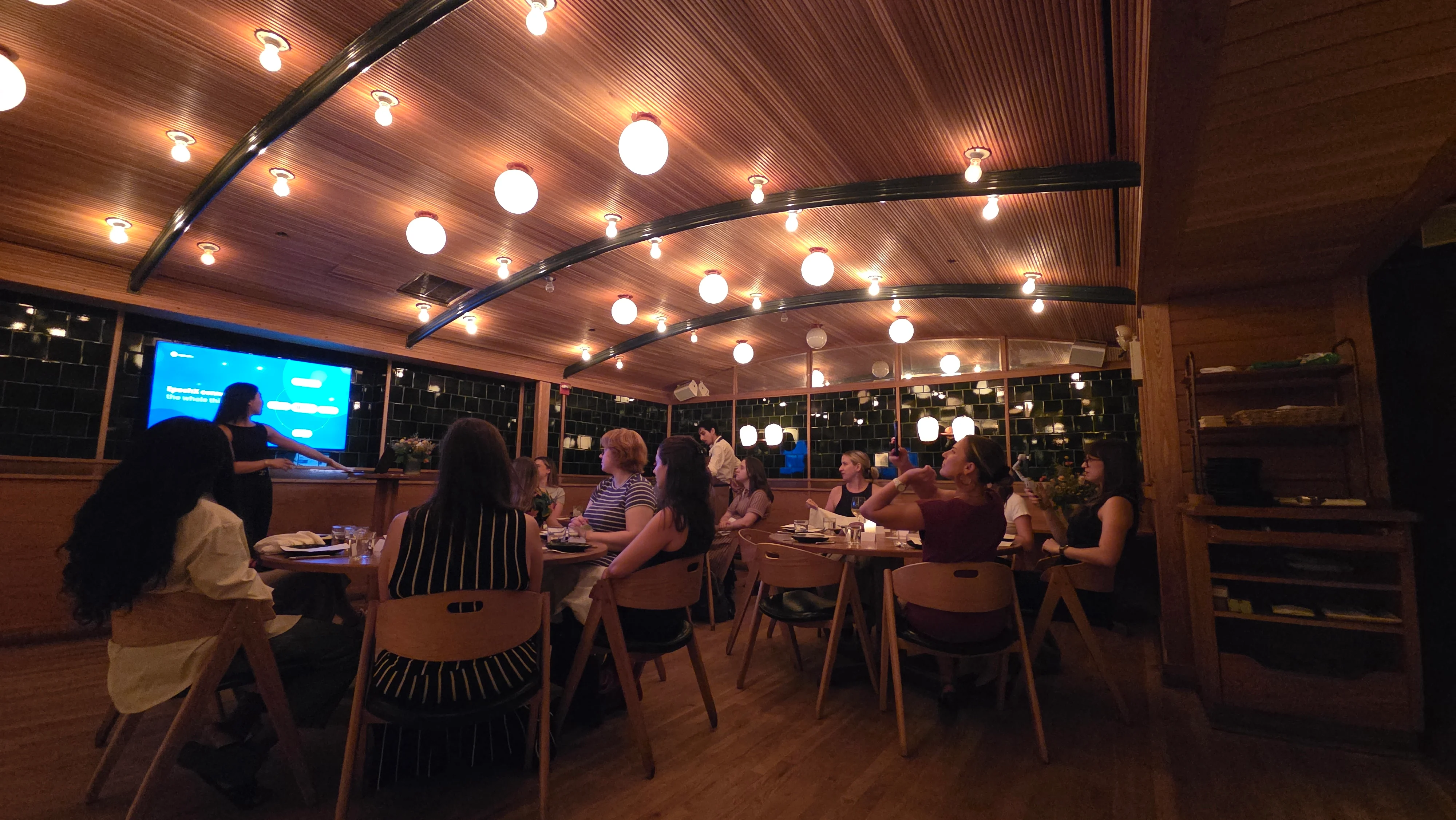
Then pick the people. At our own dinner in New York with 20 event and field marketing leaders, one of the biggest themes of the night was that building the right room is hard, and it usually starts with the guest list.
Prospects
Senior buyers from target accounts, ideally with an open opportunity or a clear reason to talk this quarter.
Customers
Customers who will speak candidly to peers. Prospects hear how it works from someone in their shoes.
Your executives
Hosts who open the night, guide the conversation, and speak for the company without pitching.
Account owners
The sellers who own the prospect accounts at the table and will run the follow-up.
Rank every name before you invite anyone
Your highest-value account isn't always your most likely attendee. Score each person on four things and build tiers from the result.
- Account priority
- Relationship strength
- Seniority
- Likelihood to attend
Send invitations in tiers, weeks ahead
Invite in tiers so a decline opens a seat for the next best guest instead of leaving a gap. Tier one is your priority list, sized to the table. Tiers two and three hold the same account and seniority mix in reserve.
Eight weeks out
Lock the plan with sales
- Agree the goal: new pipeline, expansion, or moving open deals forward.
- Pick the target accounts with sales and sort every name into tiers.
- Book a private room and confirm the date with your hosting executive.
Six weeks out
Send tier one invitations
- Account owners send a short personal note, then marketing sends the formal invite.
- Invite about as many tier one guests as you have seats.
- Track every yes, no and maybe in one list.
Four weeks out
Follow up and open tier two
- Nudge tier one non-responders on a second channel, such as LinkedIn or a call from their rep.
- Offer each declined seat to the tier two guest who keeps the account and seniority mix right.
- Send calendar holds to everyone who said yes.
Two weeks out
Fill the last seats
- Invite tier three and keep a short waitlist.
- Collect dietary needs and accessibility requests.
- Draft the seating plan and the host brief.
One week out
Confirm and remind
- Send the reminder with address, time and who is at the table by role.
- Give the venue a final headcount.
- Share the guest brief with every executive and rep attending.
Day before
Last call and final checks
- Send a last-call note to anyone still open and confirm your waitlist.
- Print place cards and the seating plan.
- Set up check-in so you know exactly who attended.
Need the wording? Use our executive dinner invitation templates, with a marketing invite, a sales-rep version, a reminder and a last call. In EpochX, invite status and audience priority stay together, so a decline can open the seat to the next appropriate guest without rebuilding the list.
Pick the venue and plan the seating
The venue decides whether the table can hold one conversation. The seating plan decides who has it.
Venue must-haves
- A private room with no through traffic
- One table, or a shape where everyone can hear one conversation
- A set or limited menu, so service doesn't break up the discussion
- Easy to reach from your guests' offices at the end of a workday
- A screen only if you will actually use it
Six prospects, two customers, two executives and two account owners.
- Prospect
- Customer
- Your executive
- Account owner
- Put each priority prospect within talking distance of their account owner and one customer.
- Split your executives across the table so every guest has a host nearby.
- Separate guests from the same company so everyone meets someone new.
- Seat customers between prospects, so prospects hear from peers, not only from you.
In EpochX, the agent turns account priority, ICP fit and relationship context into a recommended seating chart, pairing sellers with priority prospects and mixing customers, prospects and executives at the table.
Brief hosts and sales reps
Everyone from your company at the table needs the same brief a few days before the dinner: who is coming, why each guest was invited, and what a good outcome looks like for each account.
Guest brief, one per guest
- Guest
- [Name], [Title] at [Company]
- Why they're invited
- [Open opportunity, expansion, or strategic account]
- Relationship
- [Who knows them, and how well]
- Goal for tonight
- [One thing to learn, or one next step to earn]
- Seated next to
- [Names and roles]
- Follow-up owner
- [Rep name], within 48 hours
Ground rules for the table
- Your executive opens with a two-minute welcome: why this group, the topic, and that the conversation stays off the record.
- Listen more than you talk. Ask about their priorities before you share yours.
- No decks and no demos at the table.
- Learn one useful thing about each guest seated near you.
- Don't push for a meeting at dinner unless the guest asks. Earn it in the follow-up.
- Write notes within the hour: what they said, what you promised, and by when.
Run of show on the night
Here is a sample run of show for a 6:00 pm start. Move the times to suit your city and keep the order.
5:30 pm
Team arrives
Walk the room. Check place cards, the seating plan and check-in.
6:00 pm
Guests arrive
Drinks standing up. Hosts introduce guests who should meet.
6:30 pm
Seated and welcome
Your executive explains why this group is here, the topic, and the off-the-record rule.
6:40 pm
Introductions
Each guest shares their name, role and one question on their mind.
7:00 pm
Main course and discussion
The host asks two or three prepared questions and keeps any one voice from taking over.
8:15 pm
Dessert
The conversation opens up. Hosts and reps move to guests they haven't spoken with yet.
8:45 pm
Thank-you and close
Name one specific follow-up, such as sharing notes from the discussion.
9:15 pm
Team debrief
Ten minutes on what each guest said. Notes are written before anyone leaves.
Know exactly who came. EpochX supports QR check-in and onsite capture on an iPad or kiosk, so attendance lands on the event record instead of a paper list.
The 48-hour follow-up plan
The dinner lasts two hours. The follow-up decides whether it creates pipeline. Agree owners before the night, then work through this plan.
Tonight
- Log attendance and no-shows.
- Every host and rep writes notes on the guests they spoke with.
- Give each promised next step an owner.
Next morning
- Your executive host thanks every attendee personally.
- No-shows get a short note with one takeaway from the discussion.
- Reps receive the attendee list with notes for their accounts.
Within 24 hours
- Each account owner sends a personal follow-up that references the conversation.
- Book the meetings guests asked for at dinner.
- Update the CRM with attendance, notes, next step and owner.
Within 48 hours
- Check that every attending account has an owned next step.
- Chase the gaps: accounts with no follow-up or no owner.
- Send the notes or recap you promised at the table.
What to report afterward
- Target accounts invited, and how many attended
- Follow-ups completed within 48 hours
- Meetings booked with attending accounts
- Pipeline sourced or influenced, under rules you agreed with sales before the dinner
EpochX tracks post-event outreach by attendee account, flags gaps, and can nudge the right sales rep or reroute the lead, so no account at the table goes without a next step.
Executive dinner planning checklist
Tick items off as you go, copy the list into your project doc, or download it as a text file.
Executive dinner checklist
0 of 25 done
Frequently asked questions
What is an executive dinner?
An executive dinner is a small, invite-only dinner where a company hosts senior prospects, customers and its own leaders around one conversation topic. The goal is a better relationship with priority accounts, which is why the guest list matters more than the venue.
How far in advance should you send executive dinner invitations?
Send tier one invitations about six weeks before the dinner, once the account list and venue are locked. Open tier two around four weeks out as declines arrive, fill the last seats two weeks out, and send a reminder one week before.
How many people should you invite to an executive dinner?
Size tier one to the number of seats, then hold tiers two and three in reserve so every decline has a replacement who keeps the account and seniority mix right. For a 12-seat table, one workable mix is six prospects, two customers, two of your executives and two account owners.
What is the difference between an executive dinner and an executive roundtable?
An executive roundtable is a moderated discussion built around a few prepared questions, and it can happen over breakfast, lunch or no meal at all. An executive dinner is more social, with the conversation woven into the meal. Both depend on a curated guest list and a clear topic.
How should you follow up after a client dinner?
Within 48 hours, send a thank-you from the executive host, a personal note from each account owner that references the conversation, and a short note to no-shows. Update the CRM with attendance, notes, next step and owner for every attending account.
How do you measure executive dinner ROI?
Report in layers: target accounts invited and attended, follow-ups completed, meetings booked, then pipeline sourced or influenced under rules you agreed with sales before the dinner. Headcount alone doesn't show what the dinner moved.
What software helps you plan an executive dinner?
Registration tools handle RSVPs and check-in. EpochX focuses on the steps that decide pipeline: it builds a recommended guest list from your ICP, CRM context and invite criteria, coordinates outreach across email and LinkedIn, and tracks post-event follow-up by attendee account.