

An AI assistant told someone an event had been canceled. It hadn’t. Meanwhile, attendees are waiting longer to register, and event teams are trying to make budgets work against higher supplier costs.
In issue #4 of The Event Pipeline, we look at what those shifts mean for B2B event marketers, alongside the questions we’re hearing from buyers about AI governance and personal invitations. There’s also a practical exercise to check what AI says about your next event, plus 10 event and field marketing roles worth a look.
The Event Pipeline is our monthly read on what’s changing across event marketing, with industry reporting, firsthand conversations, and ideas to try in your own program.
What really goes into great event marketing?
Getting the right people in the room takes work. Giving them a reason to stay connected after they leave takes more.
In episode #3 of From Invite to Impact, Brittany Clark, Senior Events Manager at Global Relay and founder of Une Bonne Vivante, joins Jade to talk about the work behind those relationships. Their conversation covers personal outreach and why AI is making human connection more valuable, along with the business impact event marketers are expected to deliver.
Brittany’s perspective is especially useful if you’re trying to explain why a successful event involves more than what happens onsite. The invitation starts the relationship well before anyone walks through the door.
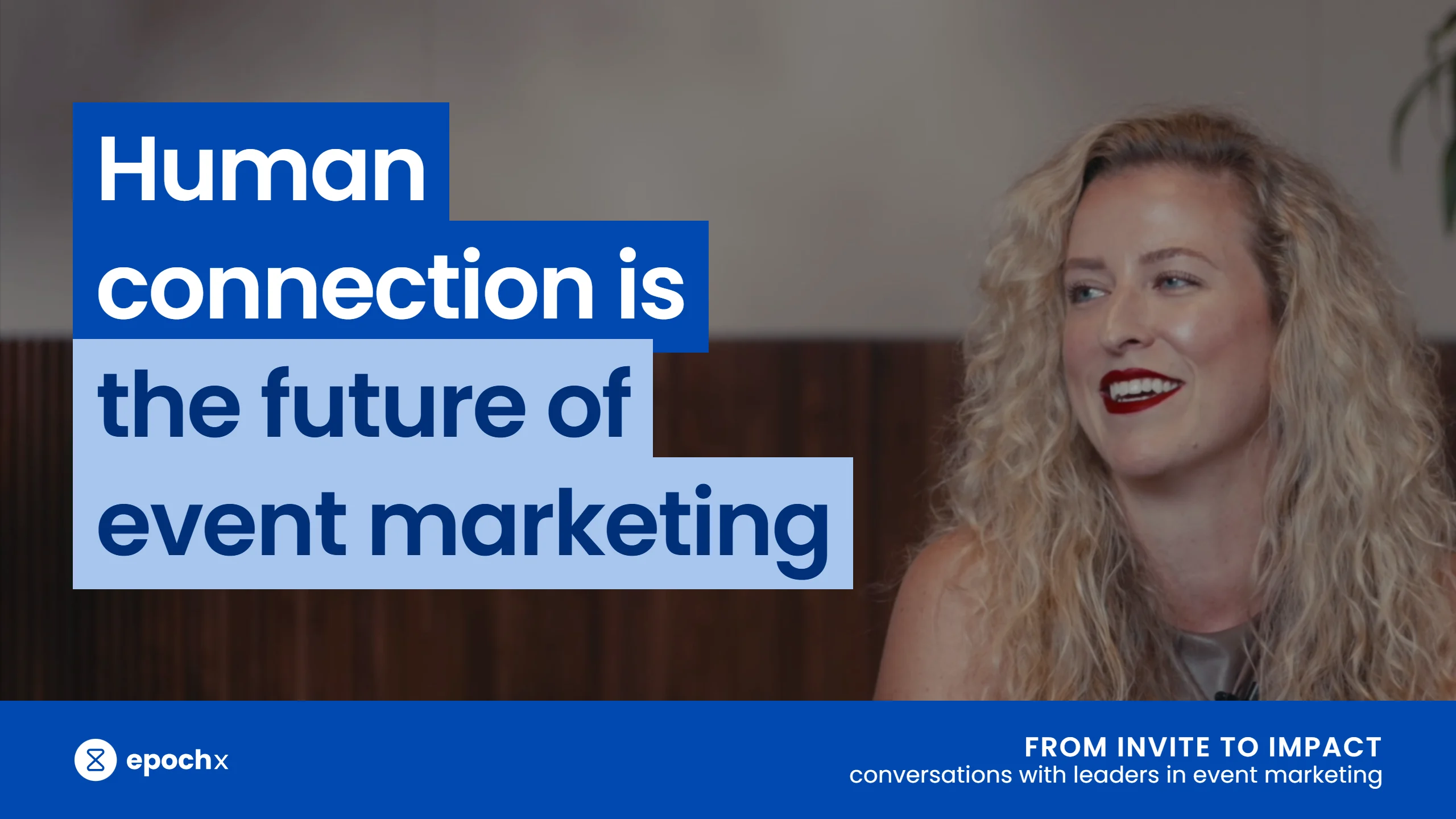
Watch the conversation with Brittany Clark.
Event platforms are opening up to AI assistants
AI assistants are starting to do more than help you write an invitation. Through the Model Context Protocol, or MCP, they can connect to other software and use the actions those platforms make available.
For event marketers, that could mean creating an event or working with an invite list from the same conversation where you’re planning it. The available actions depend on the platform’s integration and your permissions.
EpochX now has its own MCP server, connecting event workflows to Claude and ChatGPT. You can use it to create events and work with invitations and attendees. Check the setup guide for the supported actions and connection requirements.

As more tools support this approach, it’s worth looking at the actual work each connection can perform. Before adding one to your event stack, check what data it can access and which changes need your review, especially when an action affects attendee communications.
Late event registration starts with late decision-making
When registrations are slow, another reminder email is an easy thing to reach for. But it may not answer the question holding someone back: whether attending is worth their time.
A Freeman study of more than 3,400 attendees and exhibitors points to a gap between when organizers want people to register and when people have enough information to decide. According to the report, seven in 10 said a strict cancellation policy pushes them to register closer to the event.
That gives event teams something more useful to investigate than email frequency. Look at what someone can actually learn when your first invitation arrives. Is the agenda available? Are speakers confirmed? Can they understand who the event is for, and what happens if their plans change?
For your next campaign, review the registration page alongside the invitation. If you’re asking someone to commit before you can explain the value, an earlier deadline may only make the decision harder.
AI can get your event details wrong
Freeman’s Ken Holsinger asked an AI assistant about a client’s event and received an alarming answer: it had been canceled. The event had changed cities, and its old website was offline. The assistant drew the wrong conclusion.
Skift’s reporting on the incident also cites research showing that 21% of attendees and 25% of exhibitors use AI to find events. Among attendees who used it, 53% said it changed which events they considered.
An inaccurate answer can affect someone’s decision before they ever reach your registration page. You may never see that lost visit in your reporting.
Keep the current event’s date and location easy to find. If you move to a new URL, redirect the old one where appropriate. Label past editions clearly and link them to the current event so an older page doesn’t look like the latest information.
Those changes won’t guarantee an accurate AI answer, but they give people and search tools a clearer source to work from. The audit below can help you find where the confusion starts.
Rising event costs call for a fresh look at the format
Skift reports that some event line items have increased by as much as 146% since 2019, drawing on a Maritz price index across hotels and destination partners. That figure applies to individual line items, rather than every event’s total budget.
The examples are familiar to anyone building a budget: a domestic round-trip flight Maritz previously budgeted at $400 now costs $650. A cocktail centerpiece priced at $25 is projected to reach $40 by 2027.
Maritz COO Steve O’Malley’s advice is to reconsider the shape of the event before trimming each line. One client reduced a three-day meeting to two days and still met every objective.
That’s a useful exercise before your next round of budget cuts. Decide which parts of the event are essential to its purpose, then price a format built around them. You may find more room by changing the duration or production approach than by asking every supplier to shave a little off the same plan.
Buyers are asking how vendors govern their AI
A prospect’s procurement team recently asked EpochX to undergo an AI review and bias testing alongside the usual SOC 2 security checks. Saying a product uses AI was only the beginning of the conversation. The buyer wanted to understand how it was managed.
If you’re adding AI tools to your event program, prepare answers to four questions before procurement asks:
- Which tools use AI? Identify the features your team actually uses, including AI built into existing software.
- What data can they access? Be specific about attendee records, CRM data, and anything entered into prompts.
- Is attendee data used to train AI models? Confirm the vendor’s terms and the settings that apply to your account.
- Who is responsible when something goes wrong? Name the person who reviews outputs and handles errors or unintended actions.
Having those answers ready gives your security and procurement teams something concrete to assess. It also helps you spot gaps before a renewal or a time-sensitive event launch.
Personal invitations need a real reason to attend
Two field marketers recently raised the same frustration with us: generic event invitations feel impersonal. One said emails from their CEO outperform marketing campaigns. Another wanted invitations to come directly from sales reps.
These conversations are a useful reminder to look beyond the copy. When the sender already knows the recipient, they can explain why this particular event deserves a place on that person’s calendar.
For a small B2B event, identify who has the strongest relationship with each priority attendee and give that person a specific reason to reach out. Brittany’s interview offers a simple starting point: explain why you’d like that person to be there.
We also heard a request for private attendee lists to prevent unsolicited contact before an event. Visibility is a design choice worth making deliberately. Some formats benefit from introductions in advance; others need more privacy. Make the approach clear to people registering.
Try a five-minute AI audit of your event
You don’t need a new dashboard to check whether AI assistants can accurately describe your event. Start with a quick comparison, then investigate any errors you find.
- Ask the same questions in fresh conversations. Give ChatGPT, Claude, and Gemini your event’s name, and ask what it is, when and where it takes place, who is speaking, and who should attend. Avoid supplying the answers in your prompt.
- Compare the responses with your event page. Check the date, location, speakers, intended audience, and whether the event is described as happening at all. Record whether web search was enabled and which sources, if any, the assistant cited.
- Fix confusing or missing information. Make current details prominent, label past editions, and review outdated URLs. An assistant that cannot access current information should be recorded separately from one that confidently gives the wrong answer.
- Check again after meaningful updates. Repeat the exercise when you change the venue or announce speakers, as well as during a quarterly review. A correct answer today doesn’t guarantee the same answer next time.
To go further, ask which events people at your top 20 target accounts should consider attending or sponsoring. Note whether yours appears and how it is described. Treat the results as a way to find gaps in your messaging, rather than a definitive ranking of your event against competitors.
Event marketing jobs worth a look
These job listings have expired. Subscribe to The Event Pipeline for fresh event and field marketing roles in your inbox, once a month.
| Company | Role | Location and work arrangement | Listed salary |
|---|---|---|---|
| fal | Event Marketing Manager | San Francisco, onsite | $180,000–$220,000 |
| Recom | Events and Partnership Marketing Manager | US, remote | Not included in this roundup |
| Firmable | Events & Ecosystem Manager | San Francisco, hybrid | Not included in this roundup |
| Discern | Director of Event Marketing | US, remote | $135,000–$165,000 |
| Forerunner | Senior Manager, Events and Field Marketing | San Francisco, hybrid | Not included in this roundup |
| PagerDuty | Event Marketing Manager | San Francisco, hybrid | Not included in this roundup |
| Crosby | Events Lead | New York, onsite | $150,000–$180,000 |
| Parachute Health | Event Marketing Manager | New York, remote | Not included in this roundup |
| Cobot | Marketing Manager, Events and Content | Santa Clara, onsite | Not included in this roundup |
| Swooped | Senior Event Manager | US, remote | $138,000–$170,000 |
Job titles alone won’t tell you much about compensation. In this roundup, fal lists $180,000–$220,000 for a manager role, while Discern lists $135,000–$165,000 for a director. Location and scope matter when you’re comparing the two.
Across our first four issues, we’ve also seen event roles paired with responsibilities in ABM and demand generation, as well as partnerships or content. It’s worth reading closely for what you’ll own beyond the event calendar.
Get The Event Pipeline in your inbox
The Event Pipeline is our monthly read on B2B event and field marketing: firsthand insights from event teams, practical workflows, industry trends, experiments, and open roles.
Subscribe below to get the next issue.
The Event Pipeline · Once a month
