
-3.webp)
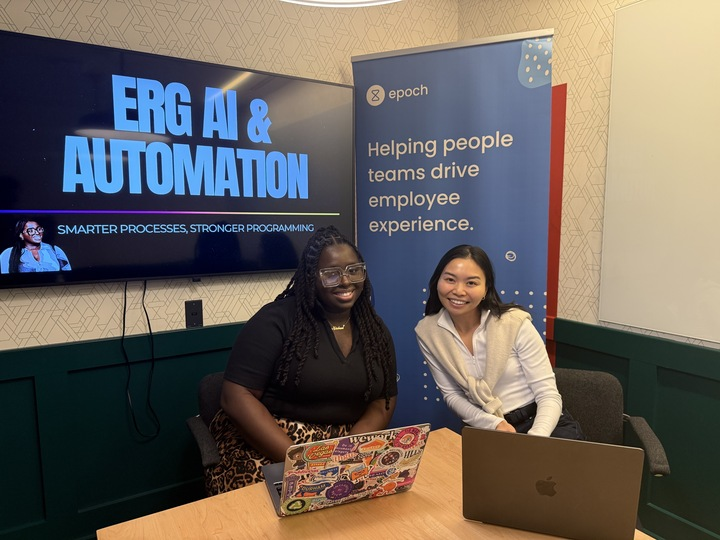
What an incredible time we had hosting the one and only Maceo Owens (better known as The ERG Homegirl) at Epoch!
As programs grow, coordination, communication, and follow-through naturally become more complex. When ERG leaders gather for annual planning or goal-setting sessions, the focus is usually on outcomes: more events, more engagement, more visibility, more impact. But during our recent webinar, Maceo Owens challenged that approach head-on.
Her perspective was simple and powerful: better outcomes don’t come from better goals; they come from better inputs.
Rather than asking “What do we want to achieve this year?” Maceo encouraged ERG leaders and program owners to ask a different question:
“What inputs do we need to change to get better results?”
That shift reframes how ERGs are built, supported, and sustained—and it formed the foundation of the conversation.
If you missed the live session, don't worry—we’ve summarized the core insights below so you can put down the stagehand tools and finally pick up the conductor’s baton.
Here are four essential takeaways from the discussion.
Maceo made it clear that she’s not a fan of traditional ERG goal-setting sessions. Not because goals are inherently bad, but because they’re often treated as the solution instead of the outcome.
When ERGs struggle, it’s rarely because leaders didn’t aim high enough. It’s because the systems supporting them weren’t designed for success in the first place.
To understand and improve those systems, Maceo introduced the 3 Ps of ERGs:
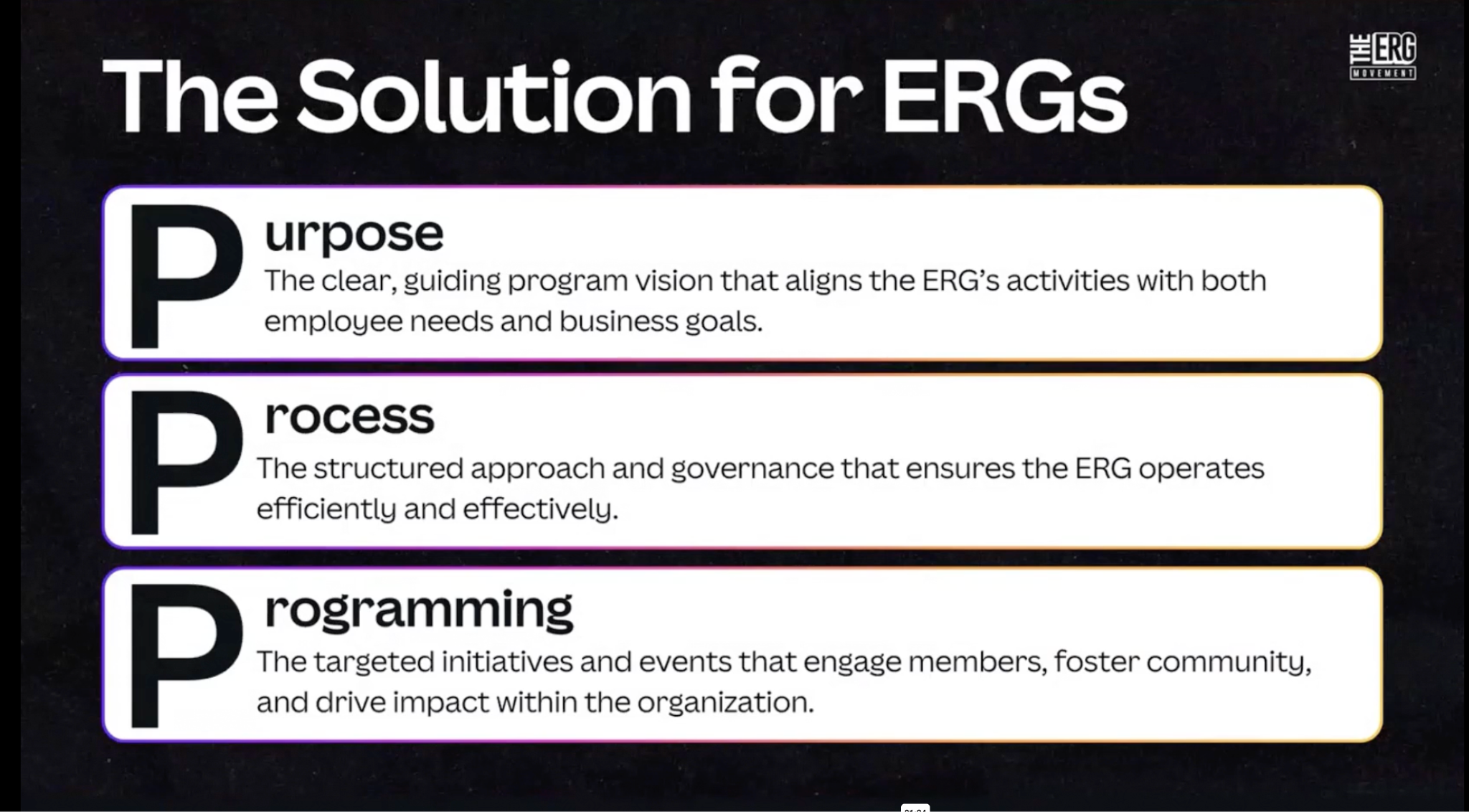
Why does this ERG exist?
What is explicitly in scope—and just as importantly, what is out of scope?
Without a clearly defined purpose, ERGs tend to overextend themselves, taking on work that isn’t aligned with their mission or supported by the organization. Clear purpose sets boundaries and prevents burnout before it starts.
How does the ERG actually function?
This includes:
If ERGs rely on tribal knowledge or “figuring it out as you go,” consistency and sustainability become nearly impossible—especially when leadership changes.
Programming isn’t just about ideas—it’s a skill.
ERG leaders are often expected to plan events, manage communications, and coordinate logistics without being taught how to do those things well. Maceo emphasized that programming and communications are real competencies that need to be developed and supported, not assumed.
When ERGs aren’t performing as expected, the question shouldn’t be “Why didn’t they hit their goals?”
It should be: Which of the 3 Ps needs attention?
One of the most practical concepts Maceo shared was the idea of the MVQ-Minimum Viable Quarter.
ERG leaders often do too much because expectations are unclear. Some run multiple events per week, while others struggle to understand what “success” even looks like. The MVQ solves this by answering one essential question:
What is the minimum that needs to happen in a quarter for this ERG to be successful?
Defining an MVQ creates focus, consistency, and clarity. It protects ERG leaders from burnout while giving companies a realistic, repeatable standard for success.
Better inputs, clear purpose, defined processes, and realistic programming expectations lead to better outcomes.
Consistency Comes From Better Operations—Not More People
One of Maceo’s strongest points was that ERG programs don’t fail because they’re understaffed. They fail because they’re under-operated.
When ERGs struggle to stay consistent, the instinct is often to add more volunteers or more leaders. But more people without better systems only adds complexity. What ERG programs actually need are clear, repeatable operational steps that make it easy to move quickly and confidently.
Speed doesn’t come from working harder; it comes from knowing exactly what to do next.
Maceo emphasized that improving ERG operations means defining the steps behind the work: how events get planned, how communications get sent, how budgets get submitted, and how leaders know they’re meeting expectations. These steps create the consistency ERGs need to sustain momentum quarter over quarter.
This is also where the idea of company-led expectations becomes critical. If ERGs are employee-powered but company-led initiatives, then it’s the organization’s responsibility to design the system that supports them. Clarity isn’t control, it’s enablement.
When expectations are clear and operations are well-defined, ERG leaders don’t slow down. They move faster.
To bring it all together, Maceo shared a powerful analogy: ERG programs are like orchestras.
Maceo Owens shared a powerful analogy for the current reality of ERG leadership. In an ideal world, ERG leaders act as Conductors, setting the tempo, guiding the vision, and aligning every part of the program toward a shared outcome.
But without the right infrastructure, many leaders end up stuck as Stagehands.
They’re pulled into the “messy kitchen” of ERG operations: managing calendars, chasing logistics, coordinating communications, and piecing together data. When energy is spent keeping the lights on, there’s little room left for strategy, purpose, or long-term impact.
Strong ERG programs require systems that support the Conductor, so leaders can lead, not just manage.
That’s where our partnership comes in. By combining The ERG Movement’s operational expertise with Epoch’s automation technology, we help ERG leaders move out of the weeds and back into their rightful role: setting direction, driving clarity, and building programs that last.
Maceo also encouraged teams to take inventory of the systems they already have before adding anything new. Many ERG programs are already using tools like Slack, shared docs, or internal calendars, but without intentionally designing how those tools support the program. The opportunity isn’t always to adopt more tools, but to identify where gaps exist in the current system. By understanding what’s working, what’s missing, and where processes break down, ERG leaders can strengthen their operations using the tools already at their disposal. Better systems come from clarity, not complexity.
Do we have the infrastructure to make it happen: With Standards + structure + systems + resources + sustainability = operational excellence.
When standards, structure, systems, and resources are intentionally designed with sustainability in mind, ERG programs can operate consistently, scale effectively, and deliver lasting impact.
We’re so grateful to Maceo for sharing her brilliance with the Epoch community. Keep an eye out for the full webinar recording coming soon!
Interested in learning more about what we covered? Explore the links below!
P.S. The ERG Movement has recently created a dedicated slack channel designed specifically for ERG leaders and supporters. Interested in joining? Reach out to our team.
One email, every month.


.png)
.jpg)
